
Paris: The Ultimate Guide to Its Hidden Histories
Did you know the stones of the demolished Bastille prison were re-used to build a bridge over the Seine? Or that one of Notre Dame’s main towers is secretly wider than the other?
Paris is a city where history isn’t just in the past; it’s written into the very stones beneath your feet. But most visitors only see what’s on the surface.
We are Scenic Zest, and we do things differently. We believe that to truly experience Paris, you have to dig into its archives. We find the stories—the scandals, the secrets, and the incredible feats of engineering—that are hidden just behind the famous facades.
This is not a normal guide. This is the hidden history of Paris.
Use this paris hidden history guide to go beyond the postcards and discover the Paris that most people miss. We’ll explore the icons, the neighborhoods, and the dark depths of the city, all through the lens of the stories that truly shaped them.
Table of Contents
The Icons: What the Archives Reveal
Paris is defined by its icons, but they all hold secrets. The stories behind their creation, their survival, and their near-destruction are often more fascinating than the monuments themselves.
Notre Dame, Sainte-Chapelle & The Crypt: The Heart of Paris
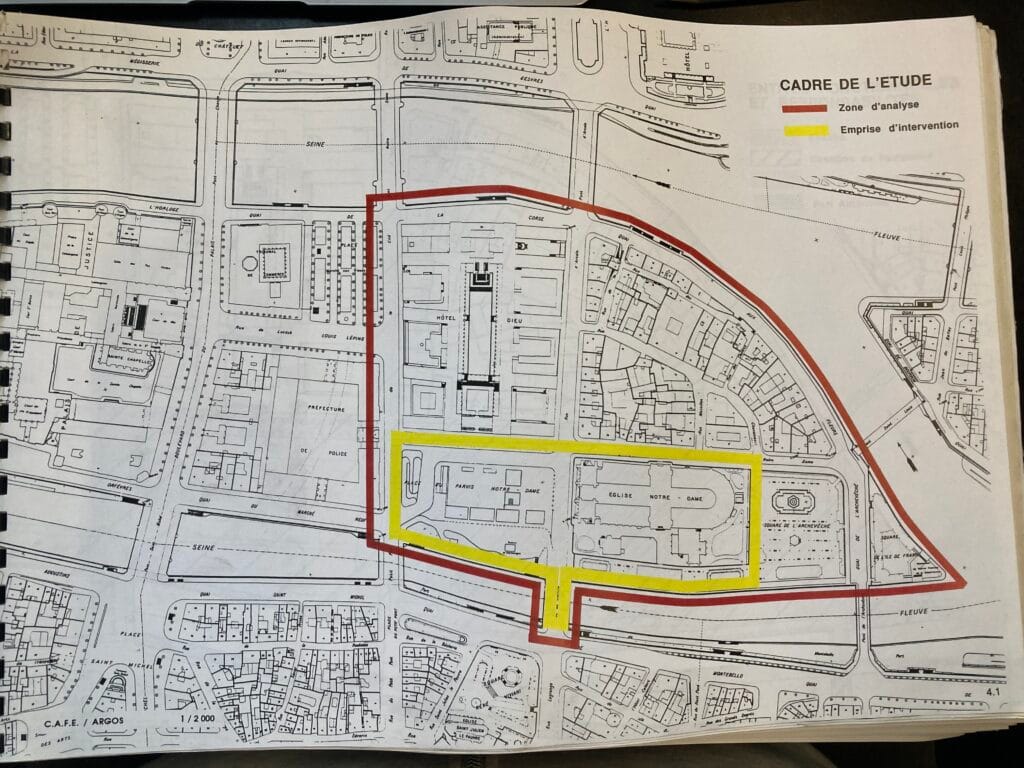
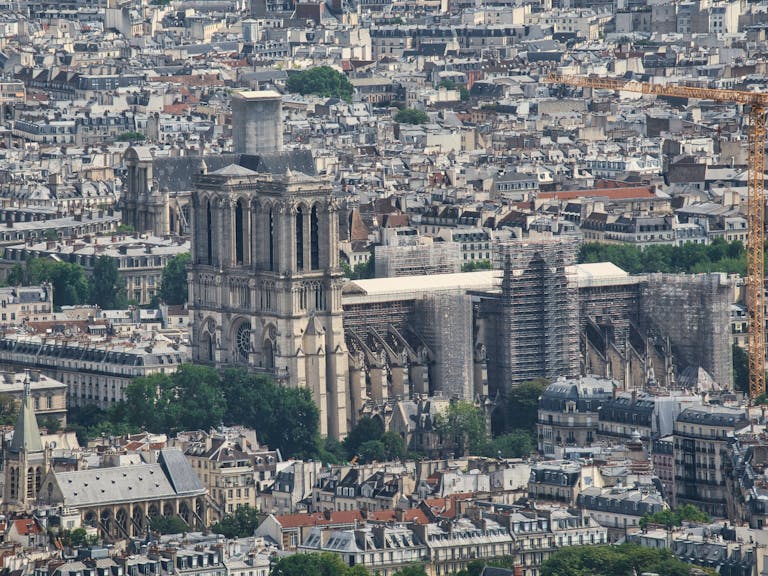
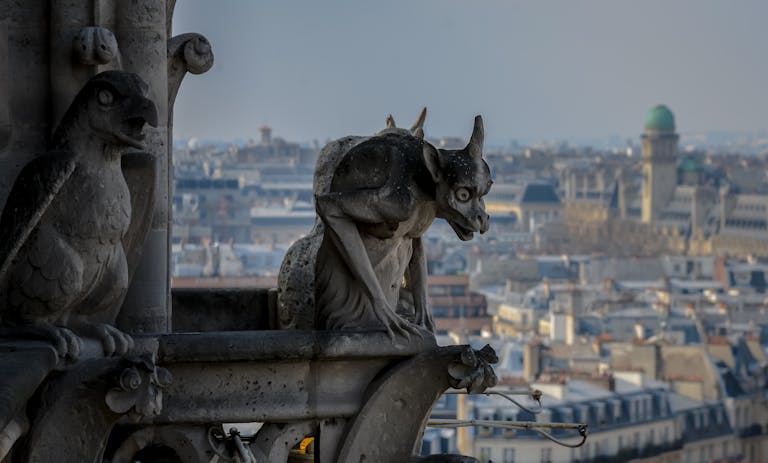
When you stand in the parvis (the square) in front of Notre Dame Cathedral, you are standing at the “Point Zero” of Paris—the very center from which all of France is measured. But you are also standing on top of 2,000 years of history.
This is the Île de la Cité, the island where a Celtic tribe called the Parisii first settled. This is where Roman Lutetia was born. And it’s where the story of Paris begins.
What the archives tell us:
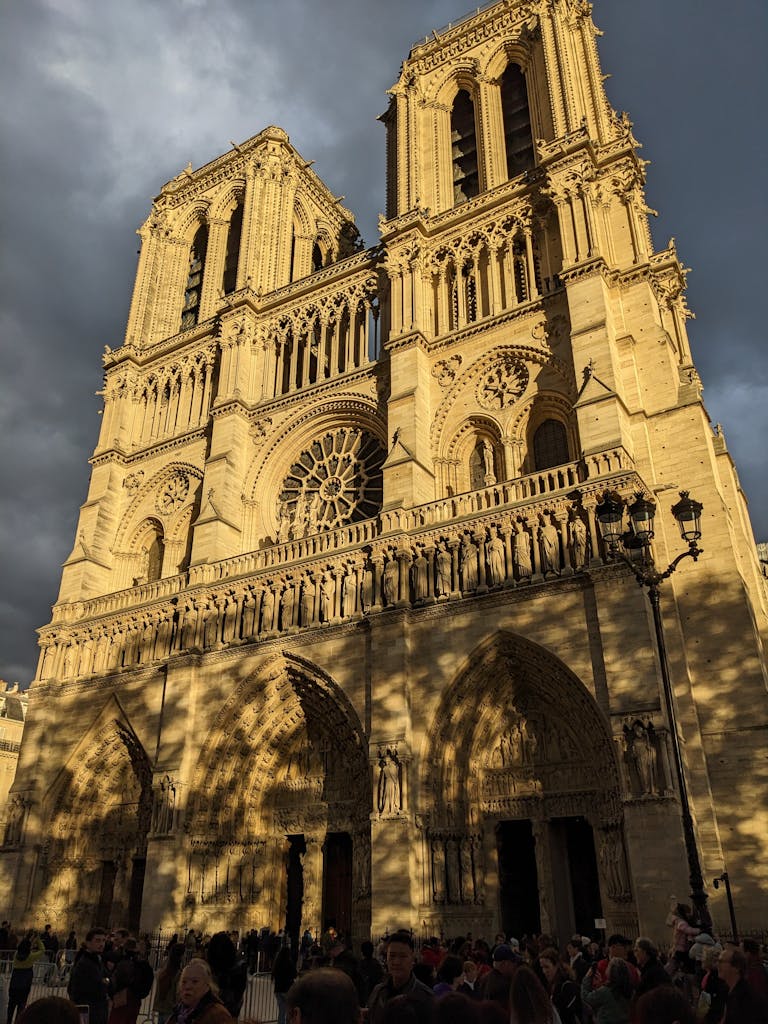
- The Asymmetric Towers: Look closely at the two main towers. The one on the left (north) is slightly wider than the one on the right (south). This isn’t an accident. As we discovered in the archives, 13th-century builders had to narrow the south tower to avoid encroaching on the original, medieval Hôtel-Dieu hospital!
- The “For Sale” Story: After the French Revolution, the cathedral was in ruins—used as a warehouse for wine barrels—and was literally put up for sale to be demolished for scrap stone. It was Napoleon’s decision to hold his 1804 coronation here that saved it, forcing a (literal) facelift with wood and stucco to hide the damage.
- The “Jewel Box” and its Symbols: Nearby Sainte-Chapelle is famous for its breathtaking stained glass, but its true “archive” story is in its details. We found the Greek letter “A” (Alpha) and the Latin word “LEX” (Law) carved into the complex. This was a 13th-century message: this building represents both the Law of God (Alpha) and the Law of Man (LEX), all under the King.
You can read the history, or you can walk it with us. Our expert guides will show you these very secrets—and more—on our Notre Dame Outside Walking Tour. We’ll peel back the layers of history right from the “Point Zero.”
And you can customize your experience:
- Choose the Sainte-Chapelle option: We’ll include your entry ticket to see the stunning “Jewel Box” and its 1,113 glass panels at your own pace.
- Choose the Crypt option: We’ll include your ticket to the Archaeological Crypt, where you can descend beneath the square and stand on the exact spot where Paris was born—the foundations of the Roman city of Lutetia.
Want the full VIP experience? Book Our Private Notre Dame Historical Tour:
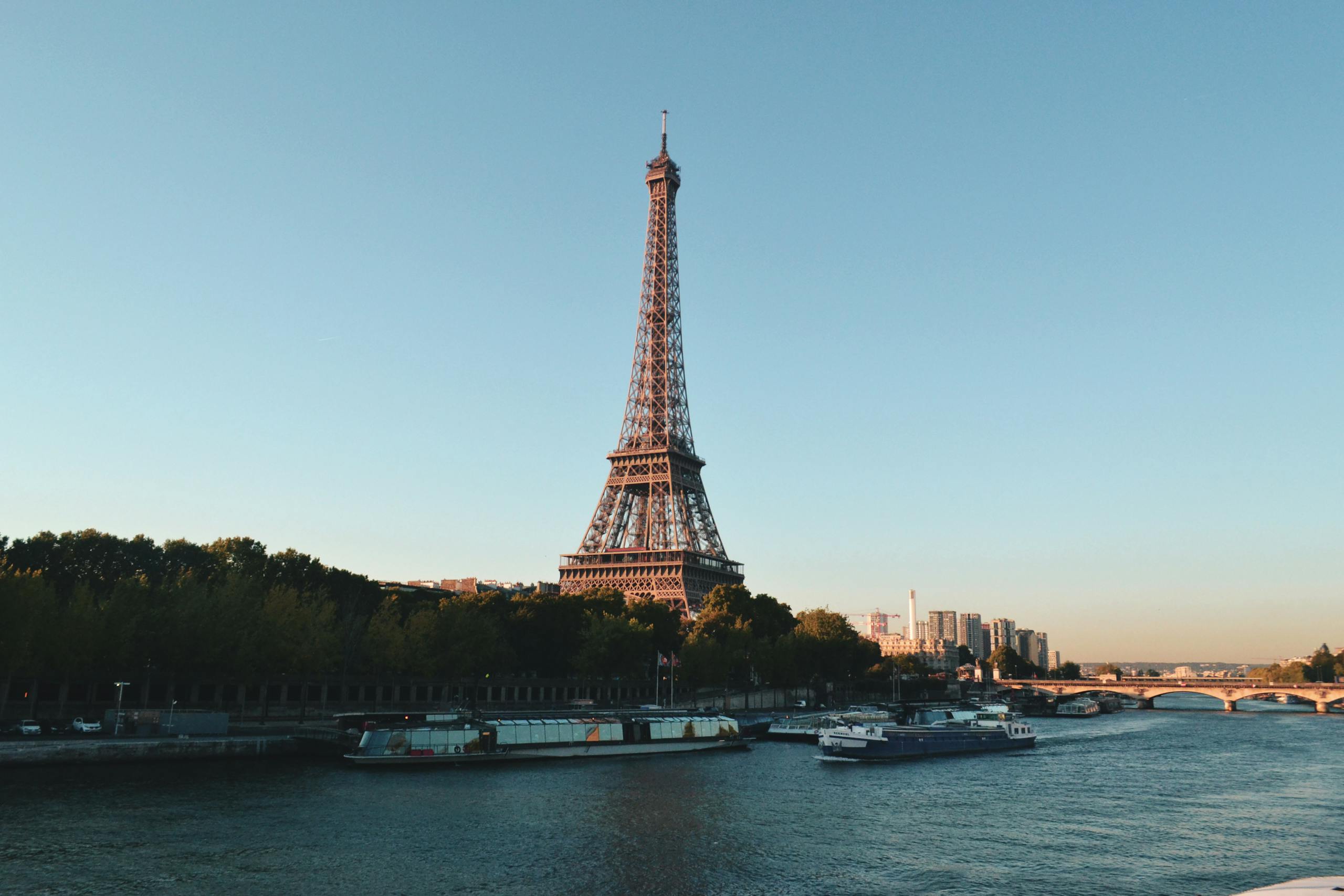
The Eiffel Tower: The Iron Lady’s Secrets
It’s the most famous silhouette on earth, but in the 19th century, the Eiffel Tower was a scandal. It was never meant to be permanent, and the leading artists and writers of Paris …protested it furiously, calling it a “monstrous” and “useless” structure.
What the archives tell us:
- The Original Color: Forget the “Tower Brown” you see today.. We found that when it was first assembled, the tower was painted a striking “Venetian Red” (a reddish-brown) to protect it from rust. It has been repainted 19 times, in colors including a bright yellow-ochre!
- The Artists’ Protest: In 1887, a “Committee of Three Hundred” (one for each meter of the tower) published a formal, angry letter. They wrote, “We… protest with all our strength… against the erection… of the useless and monstrous Eiffel Tower.”
- The Secret Apartment: What many people don’t know is that Gustave Eiffel built a small, private apartment for himself at the very top. It wasn’t for rent; it was his personal space to entertain guests like Thomas Edison and conduct scientific experiments, high above the city that had, at first, rejected his creation.
It was only saved from its scheduled demolition in 1909 because its height made it perfect for a new technology: the radio antenna.
On our guided tour of the Iron Lady…, we don’t just take you up; we take you back to the 19th century. Our expert guides will share these secrets of its construction, the stories of its creator, and the reasons it went from a scandal to a beloved icon. We’ll take you past the crowds and all the way to the summit.
The Neighborhoods: Walking Through Time
The icons may be the landmarks, but the arrondissements (neighborhoods) are the soul of Paris. Each has a past that is layered, complex, and often, completely hidden from a casual glance.
Montmartre: The Artists’ Hill
Long before Amélie and Moulin Rouge, Montmartre was not even part of Paris.
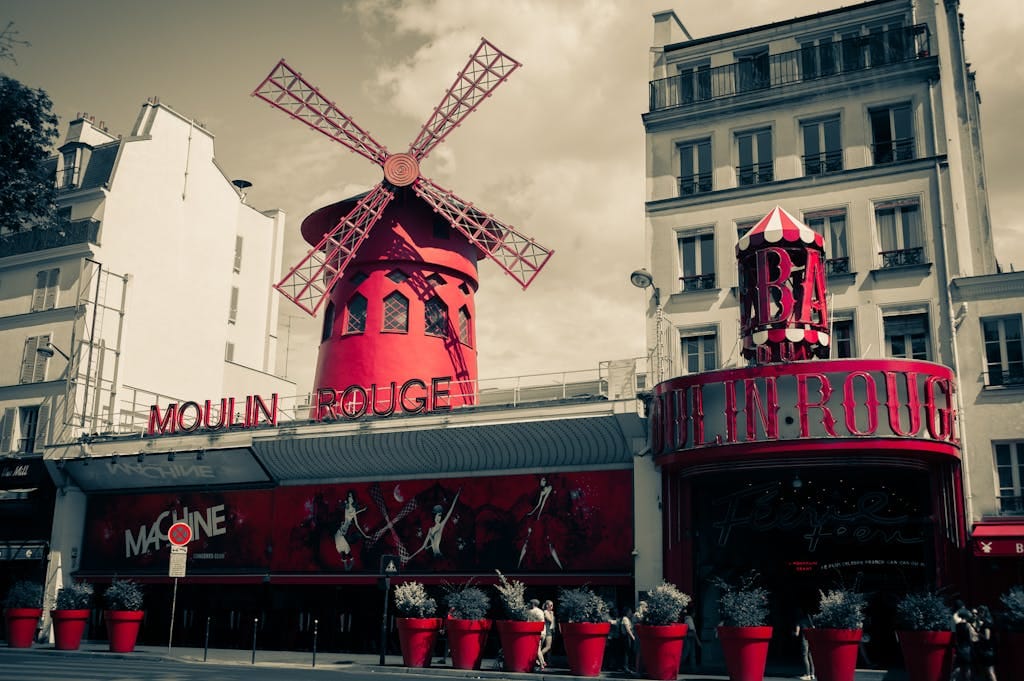
In the 19th century and early 20th century, this was a separate, rustic village on a hill, dotted with vineyards and more than 30 windmills that ground gypsum from its ancient quarries.
What the archives tell us:
- Why the Artists Came: The real “archive” story is simple: Montmartre was cheap. Because it was a village outside the city’s main tax wall (the Mur des Fermiers Généraux), wine, food, and rent were all tax-free.
- The Birth of the “Bohemian”: This is why the artists came. Picasso, Van Gogh, Renoir, and Toulouse-Lautrec weren’t just here for the stunning views; they were here because it was one of the few places in Paris they could actually afford to live, work, and party.
- A Rebellious Past: It’s not all bohemian romance. This hill is also the rebellious heart of Paris—the site where the bloody 1871 Paris Commune rebellion began.
Our Montmartre walking tour is in the works! We are digging deep into the archives to finalize the route. We’ll be skipping the tourist traps to show you the real studios, hidden squares, and cabarets where the revolution of modern art began.
Join our waitlist to be the first to know when you can book this one-of-a-kind walk through the hidden lives of Paris’s most famous artists.
The Latin Quarter & Its Roman Past
If the Île de la Cité is the birthplace of Paris, the Latin Quarter is its ancient, intellectual heart. This is where the Romans built their city of Lutetia, and you can still find the ruins of a 1st-century Roman amphitheater (the Arènes de Lutèce) hidden in plain sight.
What the archives tell us:
- Why is it called “Latin”? The name doesn’t come from the Romans, but from the Middle Ages. Sorbonne University was established in 1257, and for the following 500 years, Latin served as the common language among the students and scholars who lived, studied, and debated in these streets.
- The Oldest Street: The neighborhood’s main axis, Rue Saint-Jacques, was the Cardo Maximus—the main north-south road of the Roman city. It’s a neighborhood famous for its winding old streets, from the Roman road to the bustling, medieval Rue de la Huchette. Maximus—the main north-south road of the Roman city.
It’s a neighborhood famous for its winding old streets, from the Roman road to the bustling, medieval Rue de la Huchette. When you walk it, you are following a path laid down 2,000 years ago.
But the Latin Quarter holds another, more recent hidden gem. Just a short walk from the Roman ruins, you’ll find the Grande Mosque of Paris. Built in the 1920s as a thank-you to the North African soldiers who fought for France in WWI, it is a stunning piece of Spanish-Moorish architecture, with intricate mosaics, peaceful courtyards, and a tearoom that feels like an oasis.
It’s a part of Parisian history that is rarely on the main tourist path, which is exactly why we love it.
You can add a visit to the Grande Mosque as part of our Semi-Private Notre Dame Tour—a truly unique Scenic Zest experience that connects the medieval heart of Paris with its fascinating 20th-century history.
Into the Depths: The Dark Secrets of Paris
Some of the most incredible parts of Parisian history are not visible at street level. To find them, you have to go underground or into the foundations of its most famous buildings.
The Paris Catacombs: The Empire of Death
Beneath the streets of the 14th arrondissement lies a hidden, macabre world: the Paris Catacombs, a network of tunnels lined with the skulls and bones of over six million Parisians.
What the archives tell us:
- Why were they built? This wasn’t a medieval horror. It was a 19th-century sanitation project. By the late 1700s, Paris’s central cemeteries, like Les Innocents, were overflowing, collapsing into the cellars of nearby buildings and poisoning the water.
- The “Empire of Death”: After a major fire at the Hôtel-Dieu in 1772 and a public health crisis, the city began the massive, 12-year project of transferring the bones from the cemeteries into these abandoned limestone quarries, creating the “Empire of Death” you can visit today.
The Catacombs tell one side of Paris’s dark history. For another, join our Notre Dame walking tour to learn about the revolution, the great flood, and the fires that almost destroyed the cathedral itself.
The Louvre (Musée de Louvre): From Royal Fortress to Global Museum
When you visit the **Musée de** Louvre today, you see a grand palace and the world’s greatest art collection (you can learn more on the official museum website), you see a grand palace and the world’s greatest art collection. But the “archive” story is hidden beneath your feet.
What the archives tell us:
- The Medieval Fortress: When it was first built in 1190, the Louvre was not a home for art; it was a grim, medieval fortress. It was a fortified castle with a moat, built to protect Paris from Viking raids.
- You Can Still See It: When the museum was renovated in the 1980s, they excavated the foundations of this original 12th-century castle. Today, you can go to the basement of the Sully wing and walk among the original stones and moat of the medieval fortress, hidden beneath the glass pyramid.
The story of the Louvre is the story of France itself—from monarchy to revolution. If you love digging into this kind of royal history, you’ll love our Notre Dame & Île de la Cité Tour, which takes you to the very birthplace of the nation and the former home of its kings.
Baron Haussmann’s “Great Remodel”
You may not know his name, but Baron Haussmann is the man who created the Paris you see today. In the mid-19th century, Emperor Napoleon III gave him a single task: tear down the dark, cramped, medieval part of the city and rebuild it as a modern capital.
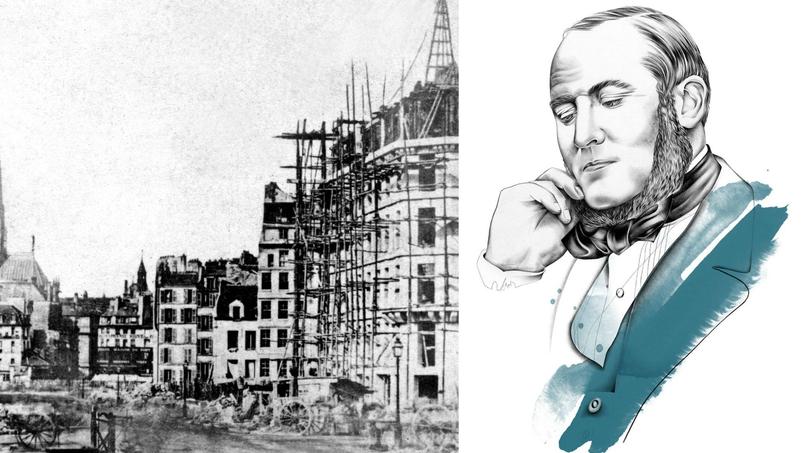
What the archives tell us:
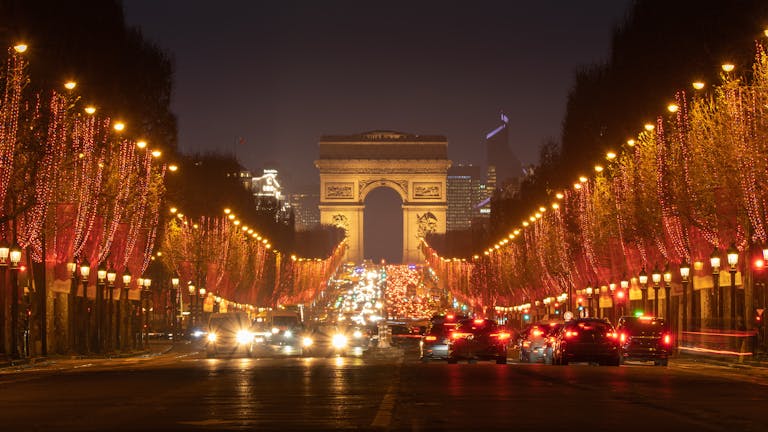
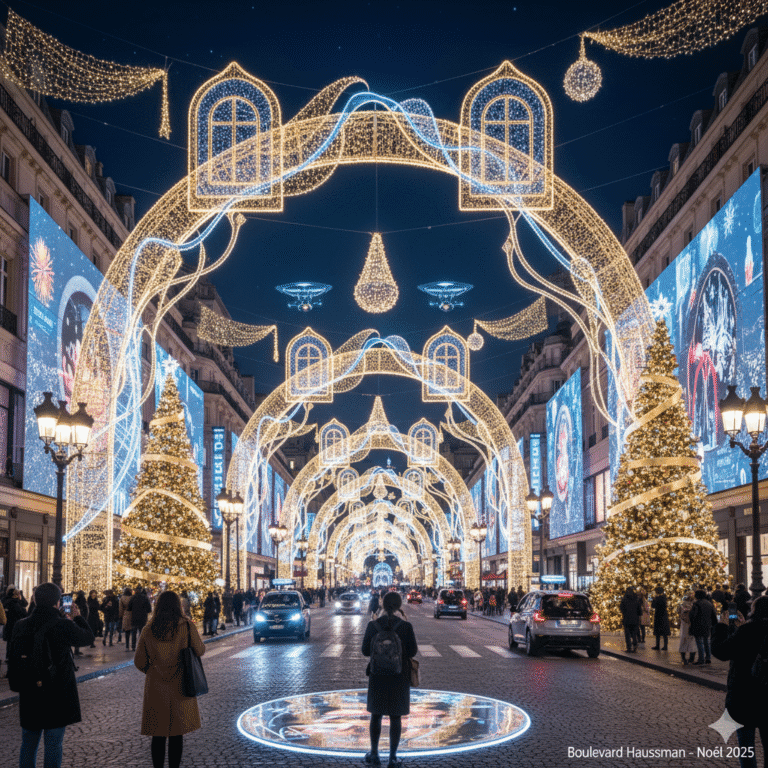
- The “Boulevards”: Haussmann’s project was brutal. He demolished over 19,000 buildings, displacing tens of thousands of people to create the wide, tree-lined boulevards, grand squares, and iconic cream-colored apartment buildings. His project also created the massive, star-shaped plaza that gives the Arc de Triomphe its dramatic setting.
- The Notre Dame “Parvis”: The wide, open square in front of Notre Dame didn’t exist before Haussmann. As we know, it was a cramped neighborhood of medieval houses and the old hospital. Haussmann demolished it all to give the cathedral “breathing room,” creating the grand view we have today.
The Hidden Gems: Paris Off the Beaten Path
The great monuments are unmissable, but the true magic of Paris is often found in the places in between. These are the “archive” secrets that are hiding in plain sight, far from the main tourist paths.
The Place des Vosges
Hidden in the Marais district, the Place des Vosges is the oldest planned square in Paris. Built in the 17th century, it’s a perfect square of red-brick houses, hidden arcades, and a peaceful central park. It’s a stunning piece of history that feels like a private world.
The Covered Passages
Long before shopping malls, Paris invented the Passages Couverts. These are 19th-century, glass-roofed shopping arcades that are like secret tunnels through the city. The Passage des Panoramas, one of the oldest, is a perfect example—a hidden world of old-world boutiques and cafes.
The Historic Streets & Bridges
- Rue des Rosiers: The heart of the Jewish Quarter, this narrow, winding street is one of the most vibrant in Paris, filled with history, character, and the city’s best falafel.
- The Collège de France: In the heart of the Latin Quarter, this isn’t a normal university. Founded in 1530, the Collège de France is one of the nation’s highest institutions, where all lectures are open and free to the public.
- The “Pont de” Story: Every “bridge of” Paris has a story. While the Pont Neuf is the oldest, the nearby Pont des Arts was the city’s first iron bridge. It’s famous today for the “love locks” that once covered it, but its “archive” story is one of 19th-century engineering innovation.
Your Paris Hidden History Guide: Start Your Journey
Paris is a city of endless layers, and you’ve now seen the “archive” stories that most visitors will never know. You’ve gone from the Roman foundations of the Crypt to the secret artists’ villages of Montmartre, from the scandals of the Eiffel Tower to the macabre ingenuity of the Catacombs.
Don’t just read this Paris hidden history guide. Come and walk the history with us.
At Scenic Zest, our walking tours are designed to take you off the beaten path and into the real stories. We dig through the archives so you don’t have to.
Book Your Scenic Zest Tour Today
- Notre Dame, Crypt & Sainte-Chapelle Tour Our flagship tour of the Île de la Cité. Explore the secrets of the cathedral, then choose to add entry to the ancient Archaeological Crypt or the stunning Sainte-Chapelle.
- Eiffel Tower Summit Guided Tour Don’t just see the Iron Lady—understand her. We’ll guide you through her scandalous history, her engineering secrets, and take you all the way to the top.
- Montmartre “Artists’ Hill” Tour (Coming Soon!) Walk the hidden paths of Picasso, Van Gogh, and Renoir. Discover the windmills, vineyards, and rebellious history of this magical hilltop village. (Coming Soon)
One Comment